
Obtain Whimsy
A tribute to Hazel Wood Aude

A note before we begin:
Hazel Wood Aude grew up at South Church in Andover, Massachusetts, the congregation I serve as Senior Pastor. She was a sophomore at Bard College. She wrote poetry and created electronic music. With her imaginary microphone, she conducted spontaneous pop-up interviews with friends or strangers. She was one of our youth interns last summer, leading our community service summer program and making the boring task of trail cleanup the ultimate adventure. After her final high school mission trip, she stood up to give her senior sermon and left us with an instruction: obtain whimsy. Not a suggestion. A directive. As if she already knew it was something we would need.
Hazel died by suicide on May 6, 2026. She was twenty years old.
This essay is my attempt to follow her instructions.
Whimsy is a strange and underrated word.
We tend to use it dismissively — as if whimsy is what you reach for when you can’t manage something serious. A whimsical decoration. A whimsical notion. Something light, a little silly, easily set aside.
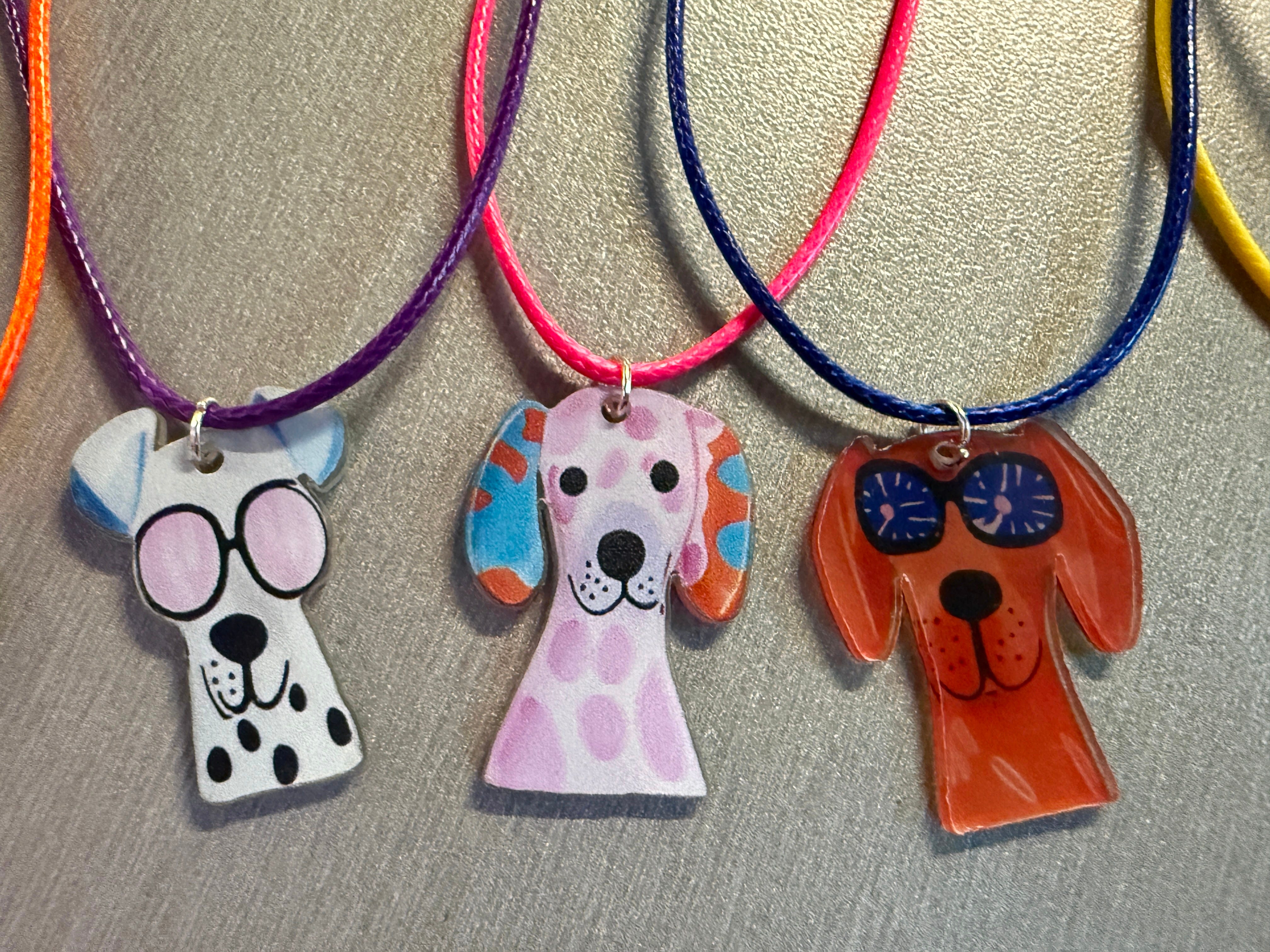
But I think Hazel understood something most of us miss: whimsy requires attention — you have to notice the absurd, and the absurd is everywhere if you’re paying close enough attention.
It requires courage. You have to be willing to break the confines that restrain you: perfectionism, people-pleasing, the relentless pressure to be productive.
And it requires vulnerability — the willingness to lean into delight, connection, and play even when, especially when, the world seems to reward neither.
Whimsy, in other words, is a practice. And like all practices, it must be obtained.
I keep coming back to that word. Obtain.
Hazel didn’t say for us to find whimsy, or stumble upon it, or wait for it to arrive. She said obtain it. Whimsy is something that you have to go after. You have to want it badly enough to seek it out, reach for it, bring it home. Whimsy doesn’t just happen to you. You have to decide, sometimes against all the serious evidence of the day, that it is worth pursuing.
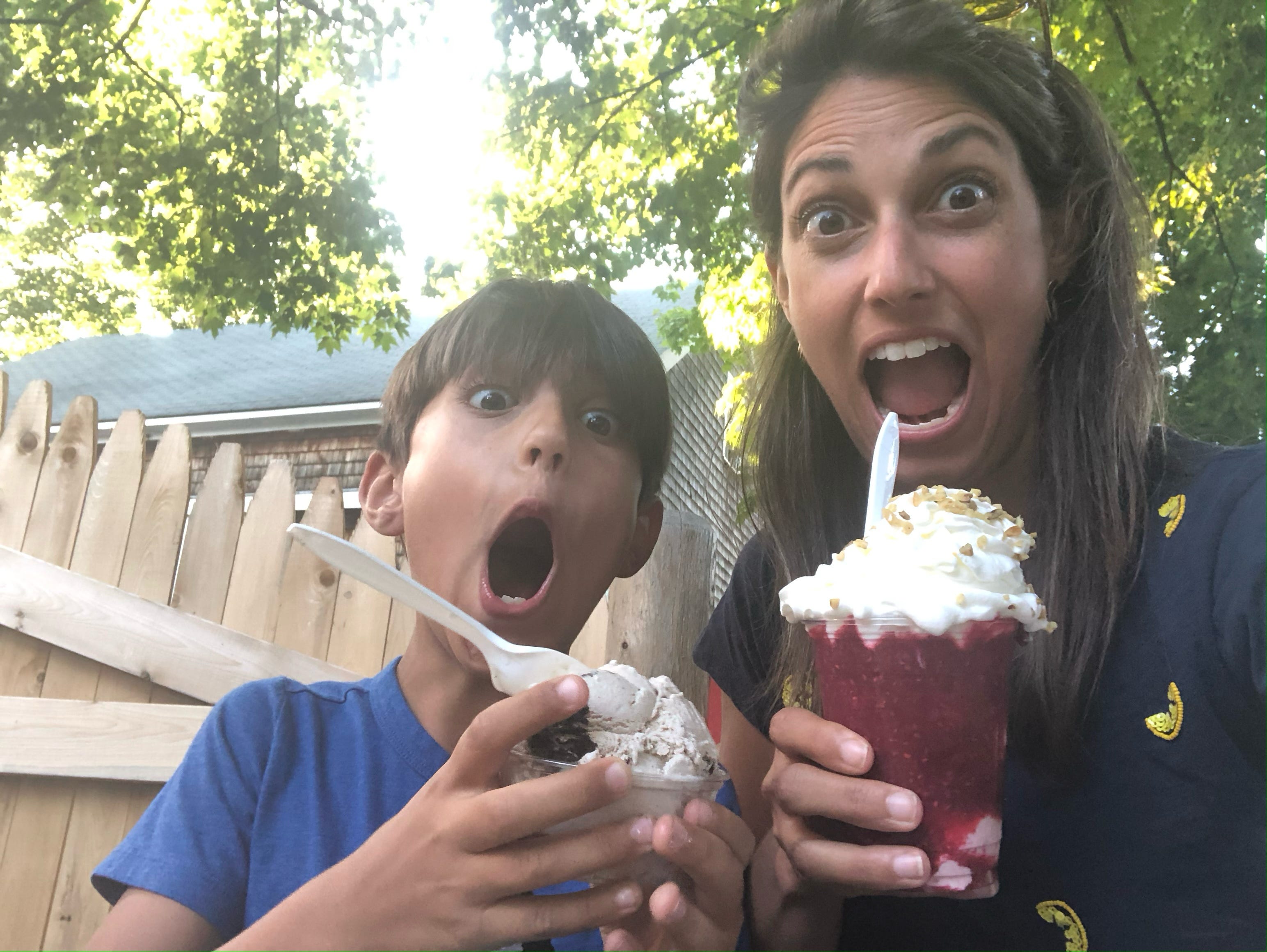
Whimsy has many forms.
It looks like spending a perfectly good evening watching Secret Lives of Mormon Wives — because “dirty sodas” are the new trend, the drama is delicious, and honestly, we all deserve something that asks absolutely nothing of us except to enjoy it.
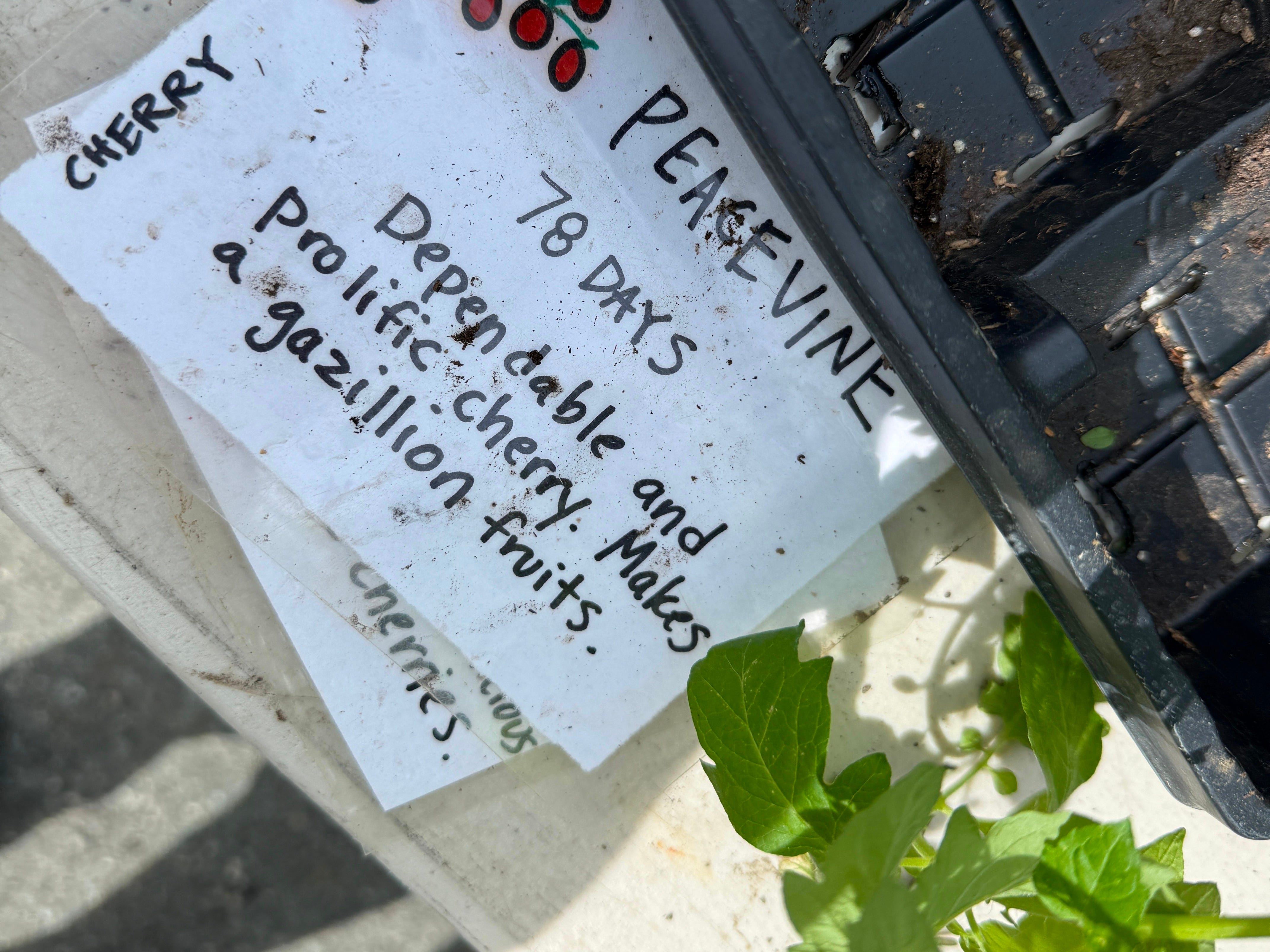
It looks like deciding to grow the most wildly unnecessary variety of cherry tomatoes in pots on the patio this summer — not the sensible ones, but the tiny purple ones, the striped ones, the ones with names like Sungold and Black Cherry and Isis Candy. Why grow the ordinary when you could grow the extraordinary?
It looks like a maple creemee passport.

Our family has a plan this summer: we are touring Vermont, creemee by creemee, stamping our passports at every stop. This is not efficient. It does not improve anyone’s resume (or our waistlines!). It is purely, gloriously pointless. That is the point.
Because whimsy asks us to declare, out loud and in action, that delight is a legitimate destination. That the ridiculous errand is sometimes the most important one.
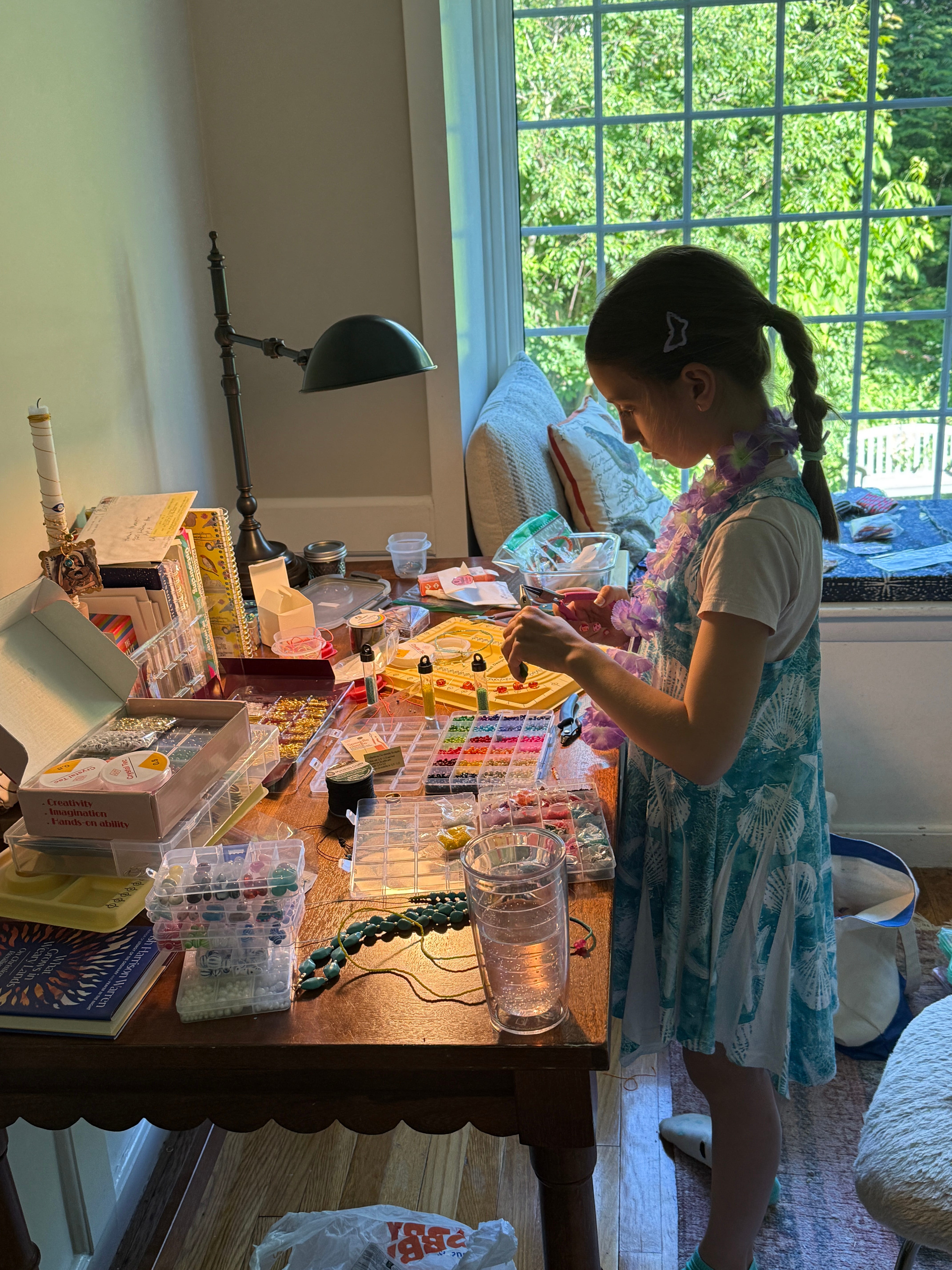
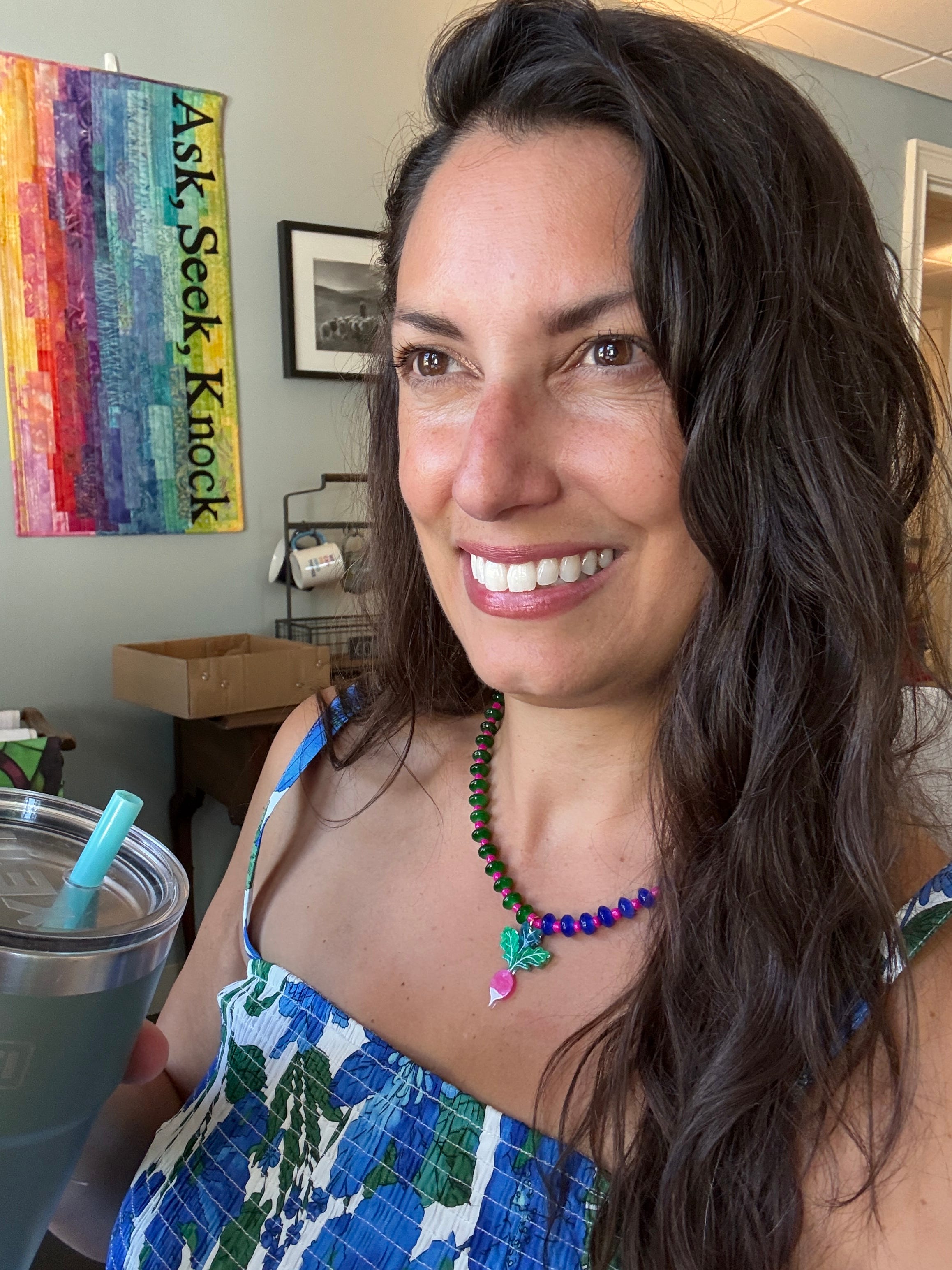
And in the last few weeks of intense ministry and grief, it has also looked like beads spread across my desk. My daughter and I are making jewelry together, her combining colors and shapes that have no business being near each other, holding up a tiny watermelon next to a star and looking at me as if to say: yes, this is exactly right. My favorite piece so far is a necklace featuring a radish. Because fruit are overplayed. And I love it unreservedly.
Trevor Noah’s latest Netflix special is called Joy in the Trenches — and in it, he tells the story of World War I soldiers who, in the space between their lines, played a game to decide who would win a cow that had wandered into no man’s land. Enemies, singing to each other. Finding a moment of absurd, glorious humanity in the middle of catastrophe.
My favorite line in this stand-up special is:
“Just because the big happens, doesn’t mean that the small stops.”
Whoa.
That is exactly what grief tries to tell you — that the small things no longer matter. That reality television and cherry tomatoes and maple creemee passports are frivolous, even indecent, when the big things are so very heavy. That you should stay in the trenches, eyes fixed on the enormity of what has been lost.
But whimsy knows better.
Whimsy insists that the small doesn’t stop — can’t stop — and that returning to it is not a betrayal of the big.
It is, in fact, what keeps us human enough to keep going.
Here is what I’ve learned about grief: it is heavy in an almost gravitational way. Despair and heartache don’t just hurt — they pull. They exert a kind of downward pressure on the spirit, a slow drag toward the ground. You can fight it with discipline, with therapy, with all the right and serious tools. But sometimes what you need is something that refuses to be serious. Something that insists on color when everything around you has gone gray.
Whimsy keeps us afloat.
Not because it’s escapism — though there’s nothing wrong with a little escape. But because whimsy requires something specific from us. It asks us to look for the absurd, which means we have to be paying attention. It asks us to break the confines that restrain us, which means we have to notice that we were confined. It asks us to lean, radically, into vulnerable connection — to sit across a table from someone we love and make something ridiculous together, and let that be enough, and let it be holy.

This is what I believe: whimsy is a form of resistance. It is what we do when we refuse to let the weight of the world have the final word.
It is how we stay human.
How we stay tender.
How we stay alive to beauty.
Hazel knew this. She told us so. And she was right that it wouldn’t just come to us — that we would have to go after it, seek it out, decide on purpose that delight is worth the effort.
So go.
Obtain it.
Whatever form it takes for you — however small, however ridiculous, however gloriously pointless.
Obtain it in her honor.
Obtain it for yourself.


Carry a Little Whimsy
I’ve been thinking about how to put whimsy out into the world. Pictured above are necklaces, bracelets, earrings, and bag charms - each handmade. If something calls to you, I’d love for it to find its way to you.
All proceeds will go to the Hazel Fund, which has been established in her memory to support the community-service summer program & trans youth. Because Hazel would want her legacy to be exactly that: young people knowing they are seen, loved, and free to be exactly who they are.
Necklaces $45 · Bracelets $25 · Bag charms $20 Earrings $20
To order, email me at dana.allenwalsh@gmail.com with the subject line Whimsy Order, and I’ll be in touch. Payment via Venmo. Want a custom piece? Ask me. Want to just donate? You’re welcome to.
I needed this. Maybe we all need this. Let's keep reaching out for whimsy and reaching out to each other, especially our trans siblings, to let them know that the world is more whimsical, more beautiful, more holy, with them in it. God bless you pastor. And may your people find the solace they need in the whimsical.
Praying hard that Hazel has found freedom and whimsy at her soul's next address--and that the people she left behind can find peace, eventually, and joy in the small, today. Thanks for this beautiful piece Dana. And we want a full accounting of all the creemees at the end of the summer!